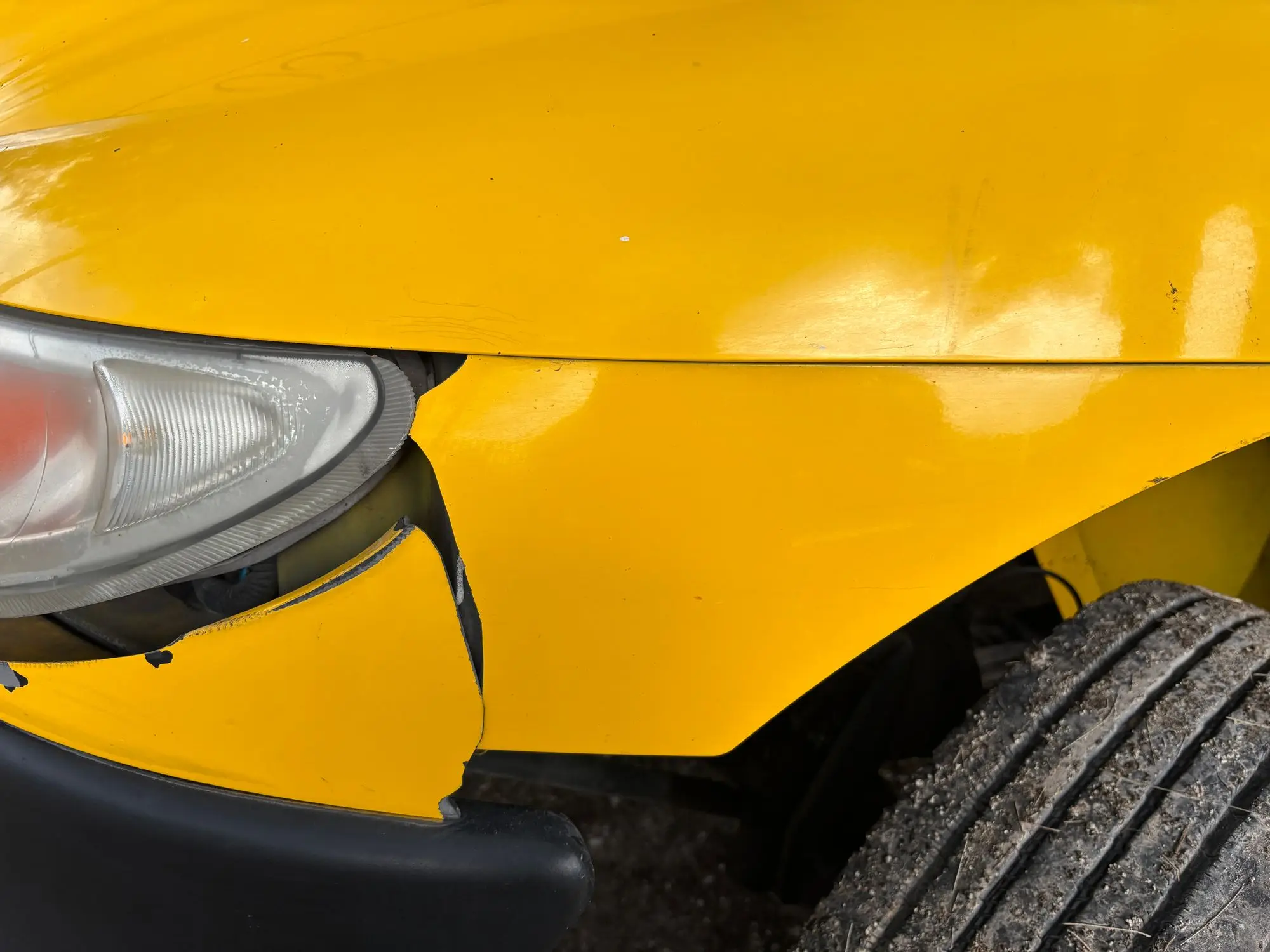
Quick answer
When a financed work vehicle is written off or stolen, the loan doesn't end — the insurer usually pays your financier first, up to the payout figure, and anything left over comes to you. If the payout is less than you owe, your business pays the shortfall unless gap cover applies. Keep making repayments until the claim settles, and tell your insurer your GST credit entitlement before you claim.
Key points
- The finance contract survives the vehicle — repayments continue until the claim settles.
- The insurer normally pays the financier first, then any surplus to you.
- A shortfall between payout and amount owing is the business's to pay unless gap cover responds.
- Tell your insurer your GST credit entitlement at or before the claim, or the settlement can attract GST.
- The insurance money is the vehicle's termination value for tax, which can trigger a balancing adjustment.
The short answer: the finance doesn’t disappear with the vehicle. When a financed ute, van or truck is written off or stolen, your insurer normally pays the financier first — up to the payout figure — and sends any surplus to you. If the insurance money falls short of what’s owed, the business pays the gap. Until the claim settles, the repayments keep coming out.
That’s the bit most owners don’t expect. The vehicle is gone, but the direct debit isn’t. This guide walks through what happens next, in the order it tends to happen, and the few calls you should make in the first 48 hours.
The first 48 hours: who to call, in what order
When the tow truck has gone, or the police have your theft report number, work through this list:
- Your insurer. Lodge the claim and get a claim number. Ask whether they’ll be assessing the vehicle as a total loss and roughly when.
- Your financier. Tell them the vehicle is damaged or stolen and give them the claim number. Ask for a payout figure dated as close to the expected settlement as possible, and ask whether there’s any hardship option if repayments will be tight while you wait.
- Your accountant or bookkeeper. Two quick questions: what did you tell the insurer about GST when you took out the policy, and how has the vehicle been depreciated? Both matter later.
- Your customers. If jobs are booked, arrange hire or a subcontractor now. Downtime usually costs more than the paperwork.
Keep everything in writing — emails rather than phone calls where you can. You’ll need the trail when the numbers come in.
Who gets the insurance money?
Your financier holds a security interest over the vehicle, registered on the PPSR, and is often noted on your insurance policy as an interested party. So when the insurer agrees the vehicle is a total loss, it generally pays the financier directly.
How that plays out depends on the structure:
| Structure | Who owns the vehicle | What happens on a total loss |
|---|---|---|
| Chattel mortgage | Your business | Insurer pays the financier up to the payout figure; any surplus comes to you |
| Commercial hire purchase | Financier until the last payment | Agreement ends early; the insurance money goes toward the amount needed to finish it |
| Finance lease | Financier | Lease is terminated under its terms; you’re usually responsible for any difference between the insurance money and the termination amount |
| Operating or fully maintained lease | Financier | Read the contract — some include insurance and a set procedure, others leave you liable for a termination amount |
The payout figure isn’t just the remaining principal. Depending on your contract it may include the balloon or residual, interest accrued to the payout date, early termination fees and any arrears. Ask for an itemised version so you can see exactly what you’re comparing the insurance money against.
What if the insurance doesn’t cover what you owe?
This is the shortfall, and it’s common on vehicles financed with a small deposit, a long term or a big balloon. Vehicles lose value faster than loans are paid down in the early years, so a two-year-old ute can easily be worth less than the amount still owing on it.
Whether you’re short comes down to two things:
How the vehicle is insured. Moneysmart explains that an agreed value policy pays a fixed amount you and the insurer set, while a market value policy pays what the insurer assesses the vehicle was worth just before the loss. Agreed values often step down each renewal, so it’s worth checking the current schedule rather than the one you signed years ago.
Whether you have gap cover. Moneysmart describes GAP insurance as cover that pays the lender if there’s a gap between what you owe and what comprehensive insurance pays when a car is written off — it’s also sold as “motor equity insurance” or “shortfall insurance” (Moneysmart — add-on car insurance). Check whether you bought it, whether it’s still current and whether it covers commercial use.
If there’s still a gap, you have three realistic options:
- Pay it from cash and close the facility cleanly.
- Agree a repayment arrangement with the financier for the residual debt.
- Plan it into the replacement. Some lenders will consider the shortfall as part of a new facility, depending on the size of the gap, your trading and the replacement vehicle. It isn’t automatic, and it means paying off part of the old vehicle on the new one, so go in with eyes open.
If there’s a surplus instead — the insurance money is more than the payout figure — it comes to the business. That cash is often the deposit on the replacement.
Keep paying while the claim settles
It’s tempting to stop the direct debit once the vehicle is gone. Don’t. The finance agreement is a separate contract and doesn’t pause because the vehicle has been damaged or stolen. Missed repayments while you wait for an assessor can mean default fees, interest on arrears and a repayment history entry that makes the replacement finance harder.
If cash flow genuinely can’t carry repayments on a vehicle you can’t use plus hire costs, call the financier early and ask about a short hardship arrangement. Lenders respond far better to a call before the missed payment than after it.
Stolen vehicles take longest. Many policies allow a waiting period to see whether the vehicle turns up before they treat it as a total loss. Ask your insurer for its timeline in writing so you can plan around it.
The GST step to take today
This one catches GST-registered businesses out. The ATO says you must tell your insurer your entitlement to GST credits on the premium when, or before, a claim is made. If you’ve done that, you won’t have a GST liability on the settlement. If you haven’t — or you understated the credit you can claim — you may have to pay GST on the settlement amount (ATO — GST and insurance).
In practice, a fully GST-registered business that tells its insurer it claims full credits will usually receive a settlement that excludes the GST component — and should expect that when comparing the cheque with the payout figure. For more on how credits work when you buy the replacement, see GST on business vehicles.
The tax side: the payout is a “sale” of the vehicle
For income tax, losing a vehicle you’ve been depreciating is a balancing adjustment event. The ATO treats an insurance payout for the loss or destruction of a depreciating asset as its termination value — in effect, the price you “sold” it for.
Your accountant compares that termination value with the vehicle’s adjustable (written-down) value:
- Payout higher than written-down value: the excess is generally assessable income.
- Payout lower: the difference is generally deductible.
A few twists for vehicles:
- Private use. If you used the logbook method, the adjustment is reduced by the private-use percentage.
- The car limit. For a passenger car that cost more than the car limit, the termination value is scaled down in proportion before the adjustment is worked out, according to the ATO’s guide to depreciating assets.
- Small business pool. If the vehicle sits in the pool under simplified depreciation, you reduce the pool balance by the termination value multiplied by the taxable-use proportion (ATO — small business pool calculations).
- Instant asset write-off. If you claimed the whole cost in the year you bought it, the written-down value is nil, so most of the business-use share of the payout can come back as income. It’s worth knowing before you spend the surplus. More on that in our instant asset write-off explainer.
An illustrative example: a plumber’s ute after a hailstorm
Illustrative only — not a real client, and the numbers are round for clarity.
A Brisbane plumber operating through a company has a two-year-old dual-cab ute on a chattel mortgage with a balloon. A hailstorm and a falling branch leave it a total loss. The insurer assesses market value at $46k. The financier’s itemised payout figure, including the balloon and accrued interest, is $51k. There’s no gap cover.
Here’s how it unfolds:
- The insurer pays the financier $46k (the company had told the insurer it claims full GST credits, so there’s no GST on the settlement).
- The company owes a $5k shortfall. It agrees to clear it from cash over two months.
- Meanwhile the plumber hires a ute for nine days and keeps repayments running until the account closes.
- Because the ute had been fully written off for tax in the year it was bought, the accountant flags that a large share of the $46k termination value will be assessable this year — and suggests timing the replacement purchase with that in mind.
- The company finances a replacement ute on a fresh chattel mortgage, with a smaller balloon this time and gap cover arranged up front.
If you’re in that position right now, you can see what replacement finance your business could qualify for while the claim is still being assessed — there’s no need to wait for the cheque to start the conversation.
Getting back on the road
Most businesses can’t wait weeks for a vehicle. A few things make the replacement smoother:
- Get the paperwork together early: claim number, the insurer’s assessment or settlement letter, the financier’s payout letter and your recent bank statements.
- Decide what you actually need now. A write-off is a chance to rethink size, payload or fuel type. Our repair or replace guide has a framework for weighing up options.
- Rethink the structure. If a big balloon left you exposed this time, a smaller one or a shorter term reduces the chance of a shortfall next time. Compare the options in the business vehicle finance planner.
- Insure the replacement properly from day one, note the financier on the policy, and decide deliberately about agreed value and gap cover.
- If you run several vehicles, losing one can be the trigger to restructure — some owners refinance the remaining fleet at the same time so everything sits on sensible terms.
Back on the road with the right finance behind you
A written-off or stolen work vehicle is a rough week. The claim, the payout letter and the shortfall are one problem; finding the next ute or van so the jobs keep getting done is another. That second part is where we help every day — including when there’s still a claim open or a small shortfall to sort out.
Telling us what’s happened takes about 60 seconds, and there’s no credit check when you first enquire. We won’t send your details to a pile of lenders, so your phone won’t start ringing off the hook. A real person who knows vehicle finance reads your enquiry, looks at where your claim is up to, and calls you to talk through the replacement.
One request: please fill the form in accurately — including the amount still owing and where the claim stands — so we can line up the right option first time.
Frequently asked questions
Do I keep paying the loan after my work vehicle is written off?
Yes. The finance agreement is separate from the vehicle's condition, so repayments stay due until the insurer settles and the financier closes the account. Missing them while you wait can add default fees and leave a mark on your credit file.
Who gets the insurance money when a financed vehicle is a total loss?
Usually the financier, because it holds a security interest and is often noted on the policy. The insurer pays the financier up to the payout figure, and any balance is paid to the business.
What happens if the insurance payout doesn't cover what I owe?
The difference is a debt the business still owes. You can pay it from cash, agree an arrangement with the financier, or in some cases include it in planning for the replacement vehicle's finance. Gap insurance, where you hold it, may cover it.
How long does a stolen vehicle claim take to settle?
It depends on the insurer and the policy. Many policies allow a waiting period to see whether the vehicle is recovered before treating it as a total loss, so check your product disclosure statement and ask the insurer for its timeline in writing.
Is the insurance payout on a work vehicle taxable?
The ATO treats an insurance payout for the loss or destruction of a depreciating asset as its termination value. If that is more than the vehicle's written-down value, the excess (reduced for private use) is generally assessable income. Your accountant can run the numbers.
Can I finance a replacement before the claim is paid?
Often, yes. Lenders look at your trading, the replacement vehicle and how the old facility will be closed. A clear claim number, the insurer's assessment and the financier's payout letter make that conversation much easier.